
Maintaining a deep sense of connection and trust in a long term relationship is often easier said than done. Even for couples who have been together for years, the daily grind can sometimes dull the spark of romance. However, Dr. Cortney Warren, a psychologist trained at Harvard Medical School, has identified a specific set of verbal habits that distinguish highly successful, trusting couples from those who struggle.

Dr. Warren recently shared seven phrases that secure partners use every day to reinforce their commitment. These small shifts in language are designed to foster vulnerability, safety, and a sense of shared purpose.

The first few phrases focus on the core of any partnership: the belief that your partner is on your side.

@drcortneywarren

Feeling that twinge of jealousy or insecurity in your relationship? It happens to all of us, but how you respond can make all the difference. Instead of immediately reacting, try this: pause and ask yourself: What does my reaction to this situation say about me? Is it about fear of being unloved? A belief that you’re “not enough”? Often, our strongest emotional reactions are more about our own insecurities than about our partner’s actions. Taking the time to reflect on your triggers, where they come from, and how you can strengthen your self-esteem can help you communicate with your partner in a healthier, more productive way. This clip is from my recent conversation with Shanenn Bryant on the Top Self Podcast. #SelfAwareness #EmotionalIntelligence #HealthyRelationships #JealousyTriggers #TopSelfPodcast #RelationshipAdvice ♬ original sound – DrCortneyWarren – DrCortneyWarren

1. “I trust you.”

Simple, to the point, and clear. This communicates that you know your partner and that you believe they have your best interest in heart, even if you get into an argument. It also allows them to feel safe making some decisions on both of your behalf.

2. “You see me as I am.”

This not only tells your partner that they know all there is to know about you without fear of hiding parts of yourself, but that you’re comfortable being vulnerable should a difficult subject come up. It communicates that you trust your partner will respond with compassion, not judgment, while implying that they can trust you to do the same in return.
Dr. Cortney Warren, relationship advice, Harvard psychologist, building trust, healthy communication, romance tips, non-verbal cues, marriage success, intimacy, partnership
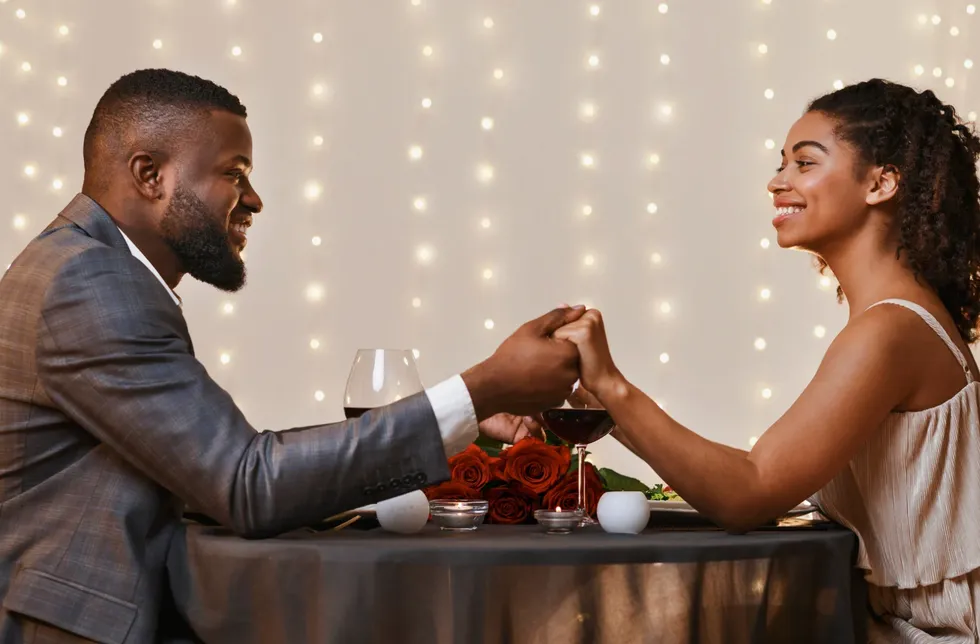
A couple on a romantic date. Credit: Canva

3. “We’ll get through this.”

Arguments, fights, and conflicts happen in even the most solid relationships. However, saying this phrase reinforces that while things still need to be sorted out, there is no intention of breaking the relationship over the disagreement. It allows more open communication and reiterates that it is you and your partner against the problem, not each other.

4. “Go have fun with your friends/Thanks for giving me space!”

If your relationship is solid, time apart shouldn’t be a threat. Alone time is natural and, frankly, healthy. Respecting your partner’s independence in turn respects yours.

Dr. Cortney Warren, relationship advice, Harvard psychologist, building trust, healthy communication, romance tips, non-verbal cues, marriage success, intimacy, partnership. Credit: Youtube

5. “I miss you.”

As a counterbalance to the previous phrase, “I miss you” isn’t an indicator of being too clingy unless you’re not offering your partner the trust to have space. It’s just a nice way of saying that you look forward to being together and builds upon that when you reunite, whether it’s after a long business trip or later in the evening after work.

6. “Let’s make a plan!”

A growing relationship means mutually planning and investing in each other’s futures to further turn “your plans” and “my plans” into “our plans.” This phrase relays to your partner that you want them around for the long haul.

7. “Can we talk?”

Communication issues are one of the primary reasons relationships fail. Asking this simple and direct question accompanied with the previous phrases as foundations in your relationship will allow trust for you to ask and be asked when something troubling occurs with either of you.

While verbal communication is important in sustaining relationships, it’s good to incorporate non-verbal gestures of support, love, and trust, too.

Now, pairing these loving wordless gestures that expertscounselors, and psychologists recommend with the previous seven phrases could help your relationship develop deeper connection and trust.

1. Eye contact

Seeing eye-to-eye literally helps you both see eye-to-eye better when discussing a difficult topic or when you want to express loving attention to your partner.

2. Smile

Smiling is a nonverbal cue to reiterate that your partner’s presence is welcomed and safe. It also reminds your partner that you’re both okay, too.

3. Supportive touch

Caressing a shoulder, a peck on the forehead, holding hands, or a tight hug—any of these and all of these are ways to provide comfort and reassurance along with your words. It could also be a way to indicate your interest in further intimacy.

4. Mirroring

Matching your partner’s posture and pose helps foster connection while also indicating you’re absorbing what they’re verbally communicating to you. So, when you adjust your posture to meet theirs when they’re discussing something important to them, they’ll know you think it’s important, too. On the other end, if you match their relaxed pose, they’ll in turn feel more relaxed, too.

5. Enjoy quiet time together

Being able to enjoy the silence in the same room bolsters feelings of safety and comfort. It shows that you and your partner don’t feel panicked or stressed about the other feeling bored, awkward, and you don’t cary the pressure of needing to be entertained/entertaining. Shared silence is precious in a relationship.

6. Handwritten notes

Okay, this might be a cheat technically, but written notes and letters can be left for your partner to find when they wake up after you have left for work early, on the kitchen table, or on a bathroom mirror as ways to express those previous seven phrases. For some people, written communication is much easier for them than speaking, too, so there’s that factor to consider.

7. Acts of service

This is a bit of a grab bag as what acts of service are depends on who you are in the relationship with. It could be making them coffee each morning the way they like it so they don’t have to. It could be doing a chore they hate doing. It could be cooking them their favorite food after finding out that they had a long day. These acts remind your partner that they’re known and safe with you.

This article originally appeared last year.
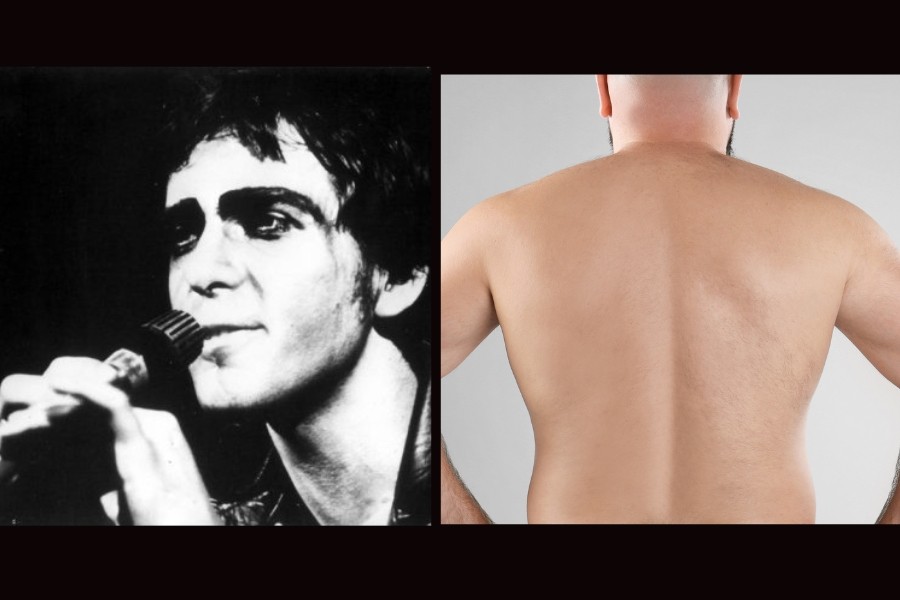
  • During one of Peter Gabriel’s final Genesis shows, a roadie got naked for one amazing prank
    A roadie got naked for a hilarious prank during one of Peter Gabriel's final shows with Genesis. Photo credit: Unknown photographer via Wikimedia Commons, Creative Commons Zero, Public Domain Dedication, cropped (left) / Canva (Africa images), cropped (right)

    The 1974 Genesis double-LP, The Lamb Lies Down on Broadway, is one of the most ambitious (and, to some, inscrutable) concept albums in rock history, following a character named Rael along a cosmic journey through the shadowy New York City streets, elaborate chambers of 32 doors, surreal cages filled with stalactites and stalagmites, underground rivers, and caves with spooky creatures. It was like a proggy Pilgrim’s Progress as envisioned by Alejandro Jodorowsky.

    When it came time to translate that vision to the concert stage, Genesis made a risky choice: debuting the entire 94-minute saga, front to back, with large chunks of the audience likely unfamiliar with the songs. (The first date of the tour, November 20, 1974 in Chicago, occurred two days before The Lamb hit stores.) The visual side of the project was as trippy as the lyrics, including scene-setting projections and a number of bizarre costumes for front man Peter Gabriel—like one particularly grotesque monstrosity, The Slipperman, that drummer Phil Collins later called an “inflatable dick.” (“It was all very Spinal Tap,” he said in an interview for the album’s 2007 reissue.) 

    If you ever wanted to appear naked onstage, this was probably the perfect time to do it—and one of the band’s roadies pulled off that hilarious prank as the tour neared its end. The silliness was especially notable, given the brooding atmosphere within Genesis—Gabriel, feeling constrained by the band’s schedule and eager to stretch his wings, had already informed his bandmates that he planned to leave following the Lamb tour. Perhaps the roadie, whom the band recalls being Geoff Banks, was attempting to add some levity. What we do know is that he made his nude cameo during one of the final shows, building on the suspense from a visual trick.

    “There was a point in The Lamb where Rael sort of splits, and we did that on stage,” Gabriel told filmmaker John Edginton in a full-band documentary interview. “I would be in the Rael outfit, and there was a dummy on the other side in exactly the same outfit. There wasn’t a lot of lighting, so it would explode, and you wouldn’t know [which was which]…Of course, for the crew, as we approached for the end of things—first of all, [Rael’s] jeans would have their flies undone with a banana hanging out. Gradually, they’d have more and more fun…”

    Keyboardist Tony Banks also talked about this infamous moment in a passage from the 2007 book Genesis: Chapter and Verse. “No one apart from the group, and the immediate circle of the group, knew that Pete was leaving and that this could well be our last tour ever,” he said. “And the roadies always had to have some fun. There was this moment in the show where Pete would be on one side of the stage with a dummy on the other side, and the strobe lights would flash on them so you couldn’t tell which was which. And, of course, for one of the last shows, one of the roadies got up there naked on the other side and took up the pose in place of the dummy…There were people watching this, my wife, for instance, practically in tears because they thought that it might be all over for Genesis, and we had a naked roadie on stage[—]was this how it was all going to end?”

    But all’s well that ends well, and Genesis managed to carry on after Gabriel’s departure by upgrading Collins to the dual role of drummer-singer. In a testament to their continued friendship, Genesis even reunited with their old singer in 1982 to help him escape mounting debts. 

    This article originally appeared last year. It has been updated.

  • 41 years ago Bono’s Live Aid stage antics ended up saving a female fan from being crushed
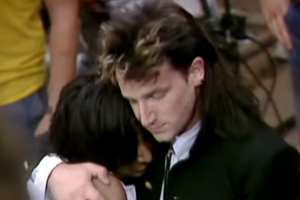
    U2 singer Bono embraces a fan pulled out of the crowd during the band's 1985 performance at Live Aid. Photo credit: Screenshot from YouTube / @LiveAid

    By July 13, 1985, U2 was a massively popular rock band: riding the wave of two successive chart-topping U.K. albums (War and The Unforgettable Fire), even being anointed the “Band of the ’80s” in a Rolling Stone cover story. But their definitive moment of that year was a performance at Live Aid, a benefit for Ethiopian famine relief staged before 72,000 at London’s Wembley Stadium and broadcast to well over 1 billion TV viewers. They were already larger than life, but now they had the perfect venue and grandiose crowd interaction to showcase it.

    Their short set featured a 12-minute version of their atmospheric 1984 song “Bad,” which they stretched out to include some quotes from The Rolling Stones’ “Ruby Tuesday” and, more famously, to accommodate the stage maneuvering of front man Bono. Halfway through the track, the singer gestured to the audience with a “come on”-type motion, eventually requesting a few female audience members be lifted out of the crowd by security.

    According to some accounts, including viral social media posts, this was some kind of “rescue” attempt, and while it’s unclear precisely why Bono took action, the story has become a staple of the U2 canon.

    In the above clip, you’ll see two fans guided to the apron area in front of the stage, where Bono briefly embraces them. But the most notable moment is when he jumps into the muddy area by the barricade, asking security to hoist over a teenager, with whom he slow-dances and offers a kiss on the cheek. Cameras, of course, caught the whole thing. Bono was a showman from day one, after all.

    Over the years, there’s been a lot of debate and discussion about this Bono-meets-fan moment. In a detailed breakdown of the performance, Rolling Stone reports that the third fan was 15-year-old Kal Khalique. Someone by that name shared their Live Aid memories with the BBC, writing that they weren’t even at the show to see U2: “My sister and I were desperate to see Wham!, so we had made it down to the front of the stage. Half way through the day U2 came on suddenly Bono was pointing to me in the crowd and after a [number] of other girls were pulled out, he finally jumped down and got the security guys to pull me out and danced and hugged me, and I even got a kiss. I’ve been a huge U2 fan ever since.”

    In 2011, The Guardian cited an article by The Sun, who apparently tracked down Khalique. “The crowd surged,” she reportedly claimed, “and I was suffocating—then I saw Bono.” But The Guardian also notes that Bono “had long made a habit of pulling girls out of the audience and dancing with them.” Was this just another example, only amplified by the drama of a hungry rock band playing the biggest stage imaginable? 

    Reasoning aside, it’s the kind of larger-than-life moment that came to define U2. It also happened at an ideal time, just ahead of their next album, 1987’s The Joshua Tree, a critically acclaimed and multi-platinum blockbuster that topped the Billboard 200 and spawned some of the bands most enduring singles, including “When the Streets Have No Name,” “With or Without You,” and “I Still Haven’t Found What I’m Looking For.”

    Live Aid also spawned one of rock’s most celebrated performances ever: Queen’s triumphant eight-track set featuring anthems like “We Are the Champions,” “Radio Ga Ga,” and “Crazy Little Thing Called Love.” That show was even etched into film history with an exacting recreation in the 2018 Freddie Mercury biopic Bohemian Rhapsody

    This article originally appeared last year. It has been updated.
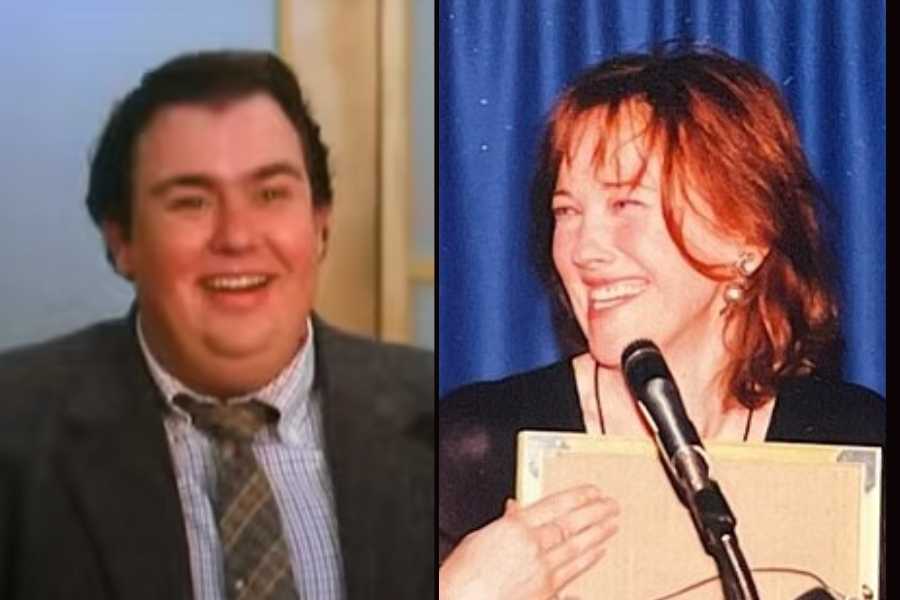
  • Catherine O’Hara’s tear-jerking eulogy for John Candy was a master class in memorializing a true friend
    ,

    Catherine O’Hara’s tear-jerking eulogy for John Candy was a master class in memorializing a true friend

    Now that O’Hara has also passed, the beautiful words she spoke for Candy resonate in a new and painful way.

    The comedy world lost two of its great lights decades apart. John Candy in 1994, and Catherine O’Hara on January 30, 2026. But O’Hara left something behind from that first loss: a nine-minute eulogy that remains one of the most moving tributes one friend has ever paid another.

    Candy was the big-hearted comic-actor best known for his string of charismatic film roles in the 1980s and early 1990s, from Stripes to Planes, Trains, and Automobiles to Uncle Buck. He died at just 43 in 1994, following a heart attack. O’Hara, his close friend and collaborator from SCTV, Second City Toronto, and Home Alone, delivered the eulogy at his memorial service in Toronto, and in nine minutes she managed to capture everything that made him irreplaceable.

    She opened the beautiful eulogy by summarizing all of the ways he “enriched” other people’s worlds, including so many small acts of kindness.

    “I know you all have a story,” she says in the clip. “You asked him for his autograph, and he stopped to ask you about you. You auditioned for Second City, and John watched you smiling, laughing. And though you didn’t get the job, you did get to walk away thinking, ‘What do they know? John Candy thinks I’m funny.’ You walked behind John to communion. You carried his bags up to his hotel room, and he said, ‘Hey, that’s too heavy. Let me get that for you.’ And then he tipped you. Or was that a day’s pay?…you caught a John Candy scene on TV one night, right when you needed to laugh more than anything in the world.” 

    Meeting John Candy

    O’Hara also shares her own story of meeting Candy in 1974, when he was director of the Second City touring company.

    “When I joined him in the main cast, he drove us all the way to Chicago to play their Second City stage,” O’Hara recalls. “And I had a crush on him, of course, but he was deeply in love with [his wife, Rosemary]. So I got to be his friend, and I closed the Chicago bars with him, just to be with him. We did SCTV together. When we all tried to come up with opening credits that would somehow tell the audience exactly what we were trying with the show to say about TV, it was John who said, ‘Why don’t we just throw a bunch of TVs off a building?’”

    The whole eulogy is filled with lovely details, as O’Hara reflects on Candy’s graciousness, his collaborative spirit, and the overall sparkle of his comedy.

    “His movies are a safe haven for those of us who get overwhelmed by the sadness and troubles of this world,” she says. “As if he knew he’d be leaving us soon, John left us a library of fun to remember him by.”

    And she ends with a moving note to illustrate their closeness: “God bless, dear John, our patron saint of laughter. God bless and keep his soul. I will miss him. But I hope and pray to leave this world too some day and to have a place near God—as near as any other soul, with the exception of John Candy.” 

    The Candy legacy

    After the eulogy video resurfaced on Reddit, dozens of fans shared their emotions.

    “I was eight years old when he passed, and to this day no celebrity death has ever hit me harder,” one user wrote. “How could such a bright light be gone so early? She’s right, his films are a safe haven for the soft-hearted. RIP.” Another added, “John Candy died over 30 years ago, but it still stings like it was yesterday. He left such an incredible and rare cultural mark.”

    Candy was also the subject of the 2025 Amazon Prime documentary John Candy: I Like Me, directed by Colin Hanks and produced by Ryan Reynolds, in which O’Hara herself appears alongside other friends and collaborators. Conan O’Brien has talked frequently about how much he loved the SCTV star; he once talked to Howard Stern about his impactful meeting with Candy back in 1984, when O’Brien was a 21-year-old student at Harvard University (and president of the Harvard Lampoon).

    “We ended up hanging out,” O’Brien recalled, “and what I remember most clearly is that he was everything I wanted him to be. He was John Candy.” 

    This article originally appeared last year. It has been updated.

Explore More Well-being Stories

Well-being

She was afraid that becoming paralyzed would end her marriage. He refused to leave.

Well-being

Can’t stop endlessly scrolling? Tips to help you take back control

Health

I’m a philosopher who tries to see the best in others – but I know there are limits

Well-being

Expert shares ancient monk’s mindset for keeping your composure when life ‘bumps’ you