Back in September, GOOD reported on a school lunch lady that was so upset by repeatedly having to deny children a warm lunch, she finally just quit her job. This story was emblematic of the attack on school lunch programs across the United States. In fact, last May, Republicans debated a bill that would scale back free lunch programs while removing regulations that keep them healthy. That’s why a recent charitable act by Jerry Fenton is so important.
Last week, Fenton walked into to his old school, Grimes Elementary of Burlington, Iowa and wrote a check for $700 to the school lunch program. The check paid off the $458 that its students owed in unpaid lunch money and added $242 to pay for future shortcomings. “I gave them extra money in the account so that every kid at Grimes Elementary school won’t be hungry the rest of this school year,” Fenton posted on Facebook. “Now it’s your turn to do something good for your fellow man.”
As news of the charitable donation spread, Fenton said he took action after learning about the number of school-age kids that go hungry in America. “I find it hard to believe that in this day and age there are kids that go hungry, it’s just unfathomable,” Fenton told WQAD. After Fenton’s donation, parents who owed money were sent a note from the school saying their balance was cleared. “A lot of the kids don’t know they have an overdue lunch balance because the notice goes home to the parents,” the school’s Food Director, Alan Mehaffy said.
Research suggests that pet ownership is associated with higher life satisfaction, with some studies estimating its impact as comparable to that of a substantial increase in income. According to the paper The Value of Pets by Michael W. Gmeiner and Adelina Gschwandtner, this comparison reflects a modeled relationship between life satisfaction and income rather than a literal financial gain.
Beyond the obvious companionship and social benefits, having a dog (or any other pet) waiting for you at home can also improve your health. Studies show that just 10 minutes of petting a dog while making eye contact can significantly reduce stress levels.
The growing body of research is convincing enough that more U.S. health professionals are beginning to recommend pet ownership as part of treatment plans.
Pink Papyrus explores research on the health benefits of pet ownership and why some professionals recommend it.
Why Are Health Professionals ‘Prescribing’ Pets?
A recent Human Animal Bond Research Institute (HABRI) report found that 1 in 5 pet owners say a doctor or therapist has recommended pet ownership to support their health. This reflects patient-reported experiences rather than a direct measure of how widely health professionals recommend pets.
The Science Behind the Data
Petting a dog for five to 10 minutes triggers the release of oxytocin, also known as the love hormone. At the same time, cortisol (the primary stress hormone) levels drop, leaving you feeling calmer and happier.
The effect goes both ways: dogs also experience increased oxytocin levels during petting. And if you make eye contact with your pet while stroking their fur, the feeling of calm and general positivity can be even stronger.
A study meta-analysis by the American Heart Association also shows that dog owners have a 31% lower risk of mortality from cardiovascular disease compared to those who don’t own dogs. This is largely due to increased physical activity (walks, play, grooming) and lower autonomic stress.
Dog Walks Help Combat Loneliness
Dog walks are great for more than just getting your daily steps; they’re a natural way to meet other dog owners and spend time outside, surrounded by people. For anyone feeling a bit isolated, that alone can make a real difference.
Dog walking has quietly become a gateway into online communities, where people share routines, tips, and even creative spins on their daily outings.
One trend that’s gained traction among more style-conscious pet parents is coordinating outfits with their dogs using playful accessories. Some brands have helped fuel this movement, turning a simple walk into a form of self-expression and something people love to share and bond over online.
Emotional Support Animals
While any pet can be an emotional support animal, dogs are usually on the front lines. These are not service dogs, trained to perform specific activities; their job is to provide therapeutic benefit through their presence alone.
Due to our deep bond, dogs can act as a physiological regulator. Besides petting and mutual gazing, many owners practice deep pressure therapy, in which the dog lies across the owner’s lap or chest. This weight triggers the parasympathetic nervous system, helping to ground a person during a panic attack or high-anxiety episode.
Furthermore, the daily routine of feeding, walking, grooming, bathroom breaks, etc., is beneficial for people who struggle with depression or anxiety. If you don’t have the motivation to get out of bed in the morning, you will do it for your dog.
Seniors also feel that their pets provide a sense of purpose, which helps keep both mind and body engaged. Having a pet depend on you can provide a powerful sense of self-worth.
The $22B Answer
Further research from HABRI highlights another angle: the economic impact on the U.S. healthcare system. According to its latest report, pet ownership saves an estimated $22.7 billion annually in medical costs.
On average, pet owners visit the doctor less frequently. Dog owners, in particular, tend to be more physically active, contributing to lower rates of obesity and cardiovascular disease.
The benefits extend beyond physical health. Many seniors find meaningful companionship in their pets or use them as a bridge to connect with other pet owners, helping reduce the risks associated with social isolation. Veterans living with PTSD also benefit from emotional support animals, which can lower long-term treatment costs.
A Healthier, Less Lonely Future
Pets play a meaningful role in our well-being. As both companions and sources of emotional support, they deliver proven benefits for physical and mental health.
The data also points to a measurable impact on public health. That said, these benefits depend on responsible ownership. Health professionals must weigh the advantages against an individual’s ability to provide a stable home and consistent veterinary care.
As Americans increasingly report feeling overwhelmed by daily life, many are using self-care to cope. Conversations and social media feeds are saturated with the language of “me time,” burnout, boundaries and nervous system regulation.
To meet this demand, the wellness industry has grown into a multitrillion-dollar global market. Myriad providers offer products, services and lifestyle prescriptions that promise calm, balance and restoration.
Paradoxically, though, even as interest in self-care continues to grow, Americans’ mental health is getting worse.
I am a professor of public health who studies health behaviors and the gap between intentions and outcomes. I became interested in this self-care paradox recently, after I suffered from a concussion. I was prescribed two months of strictly screen-free cognitive rest – no television, email, Zooming, social media, streaming or texting.
The benefits were almost immediate, and they surprised me. I slept better, had a longer attention span and had a newfound sense of mental quiet. These effects reflected a well-established principle in neuroscience: When cognitive and emotional stimuli decrease, the brain’s regulatory systems can recover from overload and chronic stress.
Obviously, most people can’t go 100% screen-free for days, much less months, but the underlying principle offers a powerful lesson for practicing effective self-care.
Chronic disease patterns mirror this strain. When daily stress becomes chronic, it can trigger biological changes that increase the risk of long-term conditions like heart disease and diabetes. The Centers for Disease Control and Prevention reports that 6 in 10 U.S. adults live with at least one chronic condition, and 4 in 10 live with multiple chronic conditions.
How people try to cope
Many Americans say they actively practice self-care in everyday life. For example, they describe taking mental health days, protecting personal time, setting boundaries around work and prioritizing rest and leisure.
The problem lies in how they use that leisure time.
Over the past 22 years, the U.S. Bureau of Labor Statistics’ American Time Use Survey has consistently found that watching television is the most popular leisure activity for U.S. adults. Americans spend far more time watching TV than exercising, spending time with friends or practicing reflection through activities like yoga. Other common self-care activities include watching movies and gaming.
Modern leisure time increasingly includes smartphone use. Surveys suggest that mobile phones have become the dominant screen for many Americans, with adults spending several hours per day on their phones.
For many adults, checking social media or watching short videos has become a default relaxation behavior layered on top of traditional screen use. This practice is often referred to as second screening.
Although many people turn to screen-based activities to wind down, these activities may have the opposite effect biologically.
Why modern screen use feels different
Pre-internet forms of leisure often involved activities such as watching scheduled television programs, listening to radio broadcasts or reading books and magazines. For all of these pastimes, the content followed a predictable sequence with natural stopping points.
Today’s digital media environment looks very different. People routinely engage with multiple screens at once, respond to frequent notifications and switch rapidly between several streams of content. These environments continuously require users to split their attention, engage their emotions and make decisions.
Modern digital platforms are designed to maximize engagement. Algorithms tend to prioritize emotionally arousing content, particularly anger, anxiety and outrage. These feelings drive clicks, sharing and time spent on platforms. Research has shown that this design is associated with higher stress, distraction and cognitive load.
When ‘rest’ doesn’t restore
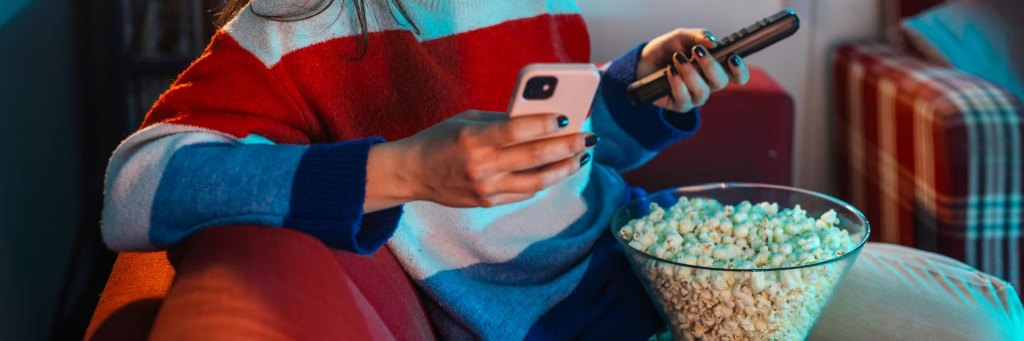
Against the backdrop of daily hassles and competing demands, it can feel like relief to flip on the TV. Practices such as streaming or so-called bed-rotting – spending extended periods in bed while scrolling – often are framed as a form of radical rest or self-care.
Other common coping behaviors include leaving the television on as background noise, scrolling between tasks throughout the day or using phones during meals and conversations. These strategies can feel restful because they temporarily reduce external demands and decision-making.
However, pairing rest with screen use may undermine the very restoration that people are seeking. Digital media stimulate attention, emotion and sensory processing. Even while people are sitting or lying still, being onscreen can keep their nervous systems in a heightened state of arousal. It may look like downtime, but it doesn’t create the biological conditions for restoration.
Unwind with analog or low-novelty activities, such as reading print, journaling, gentle movement or device-free walking. These pastimes allow mental engagement without overload.
The goal is to intentionally reduce mental load, not to abandon all digital devices.
To improve well-being in our overstimulated society, it’s important to understand the difference between feeling as though you are unwinding and actually allowing your brain and body to recover. In my view, fewer screens, fewer inputs, fewer emotional demands and more protected time for genuine cognitive rest are important components of an effective wellness strategy.
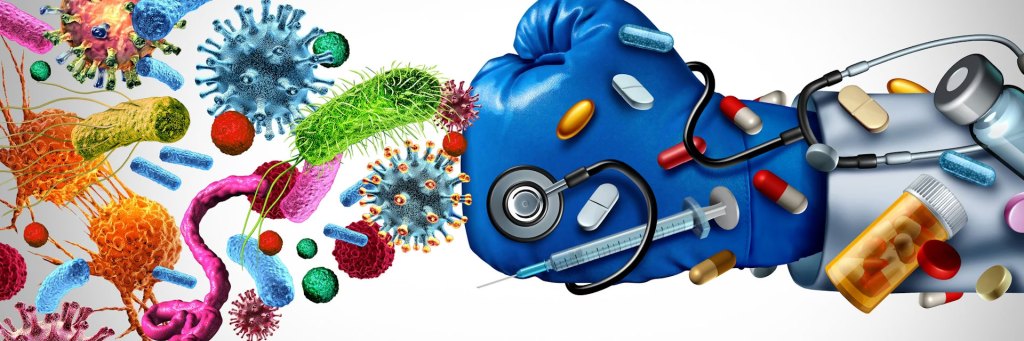
Imagine going to the hospital for a bacterial ear infection and hearing your doctor say, “We’re out of options.” It may sound dramatic, but antibiotic resistance is pushing that scenario closer to becoming reality for an increasing number of people. In 2016, a woman from Nevada died from a bacterial infection that was resistant to all 26 antibiotics that were available in the United States at that time.
Bacteria naturally evolve in ways that can make the drugs meant to kill them less effective. However, when antibiotics are overused or used improperly in medicine or agriculture, these pressures accelerate the process of resistance.
As resistant bacteria spread, lifesaving treatments face new complications – common infections become harder to treat, and routine surgeries become riskier. Slowing these threats to modern medicine requires not only responsible antibiotic use and good hygiene, but also awareness of how everyday actions influence resistance.
For decades, treating bacterial infections has involved a lot of educated guesswork. When a very sick patient arrives at the hospital and clinicians don’t yet know the exact bacteria causing the illness, they often start with a broad-spectrum antibiotic. These drugs kill many different types of bacteria at once, which can be lifesaving — but they also expose a wide range of other bacteria in the body to antibiotics. While some bacteria are killed, the ones that remain continue to multiply and spread resistance genes between different bacterial species. That unnecessary exposure gives harmless or unrelated bacteria a chance to adapt and develop resistance.
In contrast, narrow-spectrum antibiotics target only a small group of bacteria. Clinicians typically prefer these types of antibiotics because they treat the infection without disturbing bacteria that are not involved in the infection. However, it can take several days to identify the exact bacteria causing the infection. During that waiting period, clinicians often feel they have no choice but to start broad-spectrum treatment – especially if the patient is seriously ill.
For clinicians, better tests could help them make faster diagnoses and more effective treatment plans that won’t exacerbate resistance. For researchers, these tools point to an urgent need to integrate diagnostics with real-time surveillance networks capable of tracking resistance patterns as they emerge.
Diagnostics alone will not solve resistance, but they provide the precision, speed and early warning needed to stay ahead.
2. Expanding beyond traditional antibiotics
Antibiotics transformed medicine in the 20th century, but relying on them alone won’t carry humanity through the 21st. The pipeline of new antibiotics remains distressingly thin, and most drugs currently in development are structurally similar to existing antibiotics, potentially limiting their effectiveness.
To stay ahead, researchers are investing in nontraditional therapies, many of which work in fundamentally different ways than standard antibiotics.
One promising direction is bacteriophage therapy, which uses viruses that specifically infect and kill harmful bacteria. Others are exploring microbiome-based therapies that restore healthy bacterial communities to crowd out pathogens.
Researchers are also developing CRISPR-based antimicrobials, using gene-editing tools to precisely disable resistance genes. New compounds like antimicrobial peptides, which puncture the membranes of bacteria to kill them, show promise as next-generation drugs. Meanwhile, scientists are designing nanoparticle delivery systems to transport antimicrobials directly to infection sites with fewer side effects.
Many of these options remain early-stage, and bacteria may eventually evolve around them. But these innovations reflect a powerful shift: Instead of betting on discovering a single antibiotic to address resistance, researchers are building a more diverse and resilient tool kit to fight antibiotic-resistant pathogenic bacteria.
3. Antimicrobial resistance outside hospitals
Antibiotic resistance doesn’t only spread in hospitals. It moves through people, wildlife, crops, wastewater, soil and global trade networks. This broader perspective that takes the principles of One Health into account is essential for understanding how resistance genes travel through ecosystems.
Researchers are increasingly recognizing environmental and agricultural factors as major drivers of resistance, on par with misuse of antibiotics in the clinic. These include how antibiotics used in animal agriculture can create resistant bacteria that spread to people; how resistance genes in wastewater can survive treatment systems and enter rivers and soil; and how farms, sewage plants and other environmental hot spots become hubs where resistance spreads quickly. Even global travel accelerates the movement of resistant bacteria across continents within hours.
Together, these forces show that antibiotic resistance isn’t just an issue for hospitals – it’s an ecological and societal problem. For researchers, this means designing solutions that cross disciplines, integrating microbiology, ecology, engineering, agriculture and public health.
4. Policies on what treatments exist in the future
Drug companies lose money developing new antibiotics. Because new antibiotics are used sparingly in order to preserve their effectiveness, companies often sell too few doses to recoup development costs even after the Food and Drug Administration approves the drugs. Several antibiotic companies have gone bankrupt for this reason.
To encourage antibiotic innovation, the U.S. is considering major policy changes like the PASTEUR Act. This bipartisan bill proposes creating a subscription-style payment model that would allow the federal government up to US$3 billion to pay drug manufacturers over five to 10 years for access to critical antibiotics instead of paying per pill.
Still, the bill represents one of the most significant policy proposals related to antimicrobial resistance in U.S. history and could determine what antibiotics exist in the future.
The future of antibiotic resistance
Antibiotic resistance is sometimes framed as an inevitable catastrophe. But I believe the reality is more hopeful: Society is entering an era of smarter diagnostics, innovative therapies, ecosystem-level strategies and policy reforms aimed at rebuilding the antibiotic pipeline in addition to addressing stewardship.
For the public, this means better tools and stronger systems of protection. For researchers and policymakers, it means collaborating in new ways.
The question now isn’t whether there are solutions to antibiotic resistance – it’s whether society will act fast enough to use them.